How to refactor manual subscriptions to rxEffects
This is a case study: take a side effect wired up with manual subscribe/cleanup and refactor it to rxEffects, which ties the effect to the component lifecycle for you. rxEffects is the sanctioned replacement for the removed hold() on the functional RxState surface.
Problem
Start with the side effect and two common ways to execute it:
@Component({
  // ...
})
export class MyComponent {
  // The side effect (`console.log`)
  private effectFn = (num: number) => console.log('number: ' + num);
  // The interval triggers our function including the side effect
  private trigger$ = interval(1000);

  constructor() {
    // [#1st approach] The subscribe's next callback wraps and executes the side effect
    this.trigger$.subscribe(this.effectFn);

    // [#2nd approach] `tap` is used to wrap and execute the side effect
    this.trigger$.pipe(tap(this.effectFn)).subscribe();
  }
}
Both leak the subscription, so you have to add boilerplate to handle cleanup:
import { takeUntilDestroyed } from '@angular/core/rxjs-interop';

@Component({
  // ...
})
export class MyComponent {
  // The side effect (`console.log`)
  private effectFn = (num: number) => console.log('number: ' + num);
  // The interval triggers our function including the side effect
  private trigger$ = interval(1000);

  constructor() {
    this.trigger$
      .pipe(
        takeUntilDestroyed(),
        // ⚠ Notice: Don't put any operator after takeUntil to avoid potential subscription leaks
      )
      .subscribe(this.effectFn);
  }
}
A couple of things are crucial here:
- unsubscribe on destroy
- keeping
takeUntilDestroyedas the last operator in the chain
Another way would be using the Subscription to run the cleanup logic:
@Component({
  // ...
})
export class MyComponent implements OnDestroy {
  // The side effect (`console.log`)
  private effectFn = (num: number) => console.log('number: ' + num);
  // The interval triggers our function including the side effect
  private trigger$ = interval(1000);
  // ⚠ Notice: The created subscription must be stored to `unsubscribe` later
  private readonly subscription: Subscription;

  constructor() {
    // ⚠ Notice: Never forget to store the subscription
    this.subscription = this.trigger$.subscribe(this.effectFn);
  }

  ngOnDestroy(): void {
    // ⚠ Notice: Never forget to clean up the subscription
    this.subscription.unsubscribe();
  }
}
Solution
In RxAngular we think the essential problem is the call to subscribe itself. Every Subscription needs to be unsubscribed manually, which most of the time produces heavy boilerplate or even memory leaks if ignored or done wrong. Like rxState, rxEffects is a local instance created by a component and thus tied to the component's lifecycle. You can manage Observables as reactive triggers for side effects, or manage Subscriptions that internally hold side effects.
To imperatively stop a registered effect before the component is destroyed, call the cleanup function returned by register:
const stop = effects.register(obs$, fn);
/* later */ stop();
Any registered side effect is cleaned up automatically when the related component is destroyed.
Using rxEffects to maintain side effects:
import { rxEffects } from '@rx-angular/state/effects';

@Component({})
export class MyComponent {
  // The side effect (`console.log`)
  private effectFn = (num: number) => console.log('number: ' + num);
  // The interval triggers our function including the side effect
  private trigger$ = interval(1000);

  private effects = rxEffects(({ register }) => {
    register(this.trigger$, this.effectFn);
  });
}
⚠ Notice: Avoid calling
registerorsubscribeinside the side-effect function.
Impact
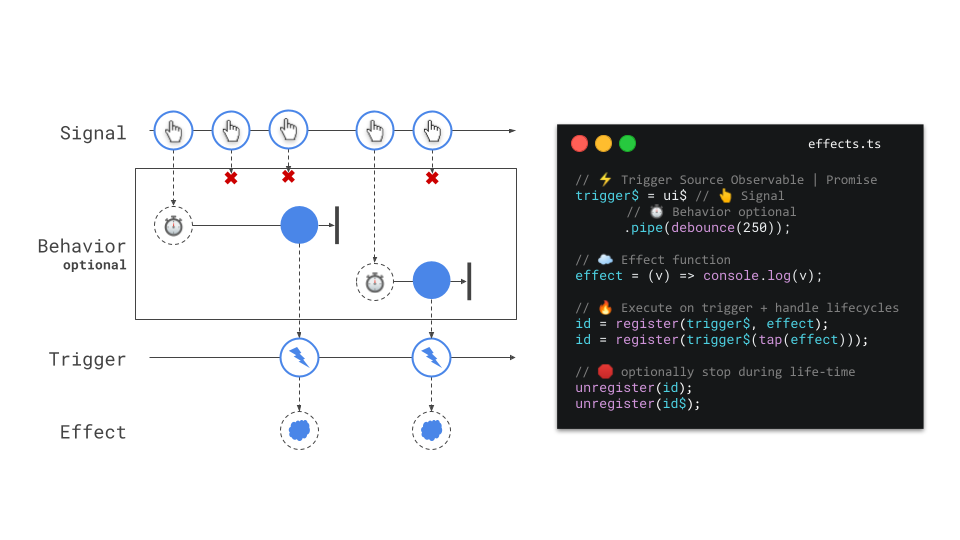
Compared to common approaches, rxEffects does not rely on additional decorators or operators, and it removes the need to call subscribe.
This results in less boilerplate and good guidance toward a resilient, ergonomic component architecture. The optional imperative methods help glue third-party libraries into a mixed but clean code style in Angular.
See also
When to reach for an
Observable-triggeredrxEffectsregister versus a native signaleffect()(the underlying reactive-discipline rationale) is covered by the RxState reactive discipline & effects concept.